On June 29, 2026, at the invitation of ADRI, Dr. C. Cindy Fan, Ph.D., a world-renowned scholar in population and migration studies and professor in the Department of Geography at the University of California, Los Angeles (UCLA), visited Conference Room 308 of the School of Sociology to deliver an insightful academic lecture titled “Shrinking Population in China: Family Planning Policy, Social Changes, and Fertility Decline.” The lecture was moderated by Professor Chen Chen of the School of Sociology and attracted enthusiastic participation from numerous faculty and students both online and in person.
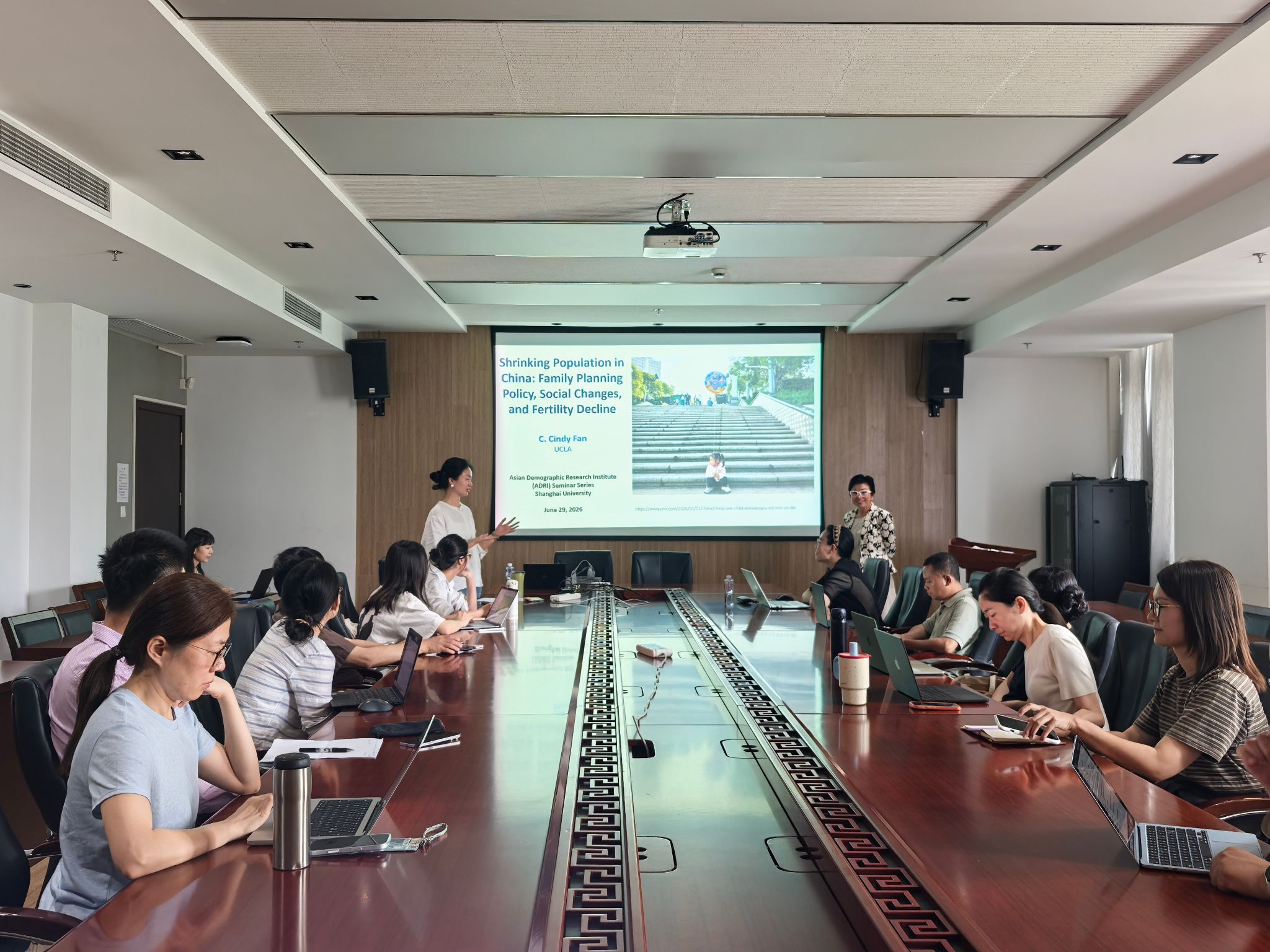
Professor C. Cindy Fan was born in Hong Kong and earned her bachelor’s degree from The University of Hong Kong, her master’s degree from The Chinese University of Hong Kong, and her Ph.D. from Ohio State University. She has long been engaged in research on population migration, family separation, and regional development in China and the Asia-Pacific region. Her pioneering work, China on the Move, has had a profound impact on the international academic community. She has served as co-editor-in-chief of top international journals such as Regional Studies and Eurasian Geography and Economics. She has received numerous honors, including the UCLA Distinguished Teaching Award, the Distinguished Scholar Award of the Asian and China Specialty Group of the American Association of Geographers, and an American Council on Education Fellowship. She has also received major research grants from the Andrew W. Mellon Foundation, the Henry Luce Foundation, and the National Science Foundation (NSF). She is currently a Fellow of the National Academy of International Education (U.S.) and holds an honorary Doctor of Laws degree from the University of Bristol.
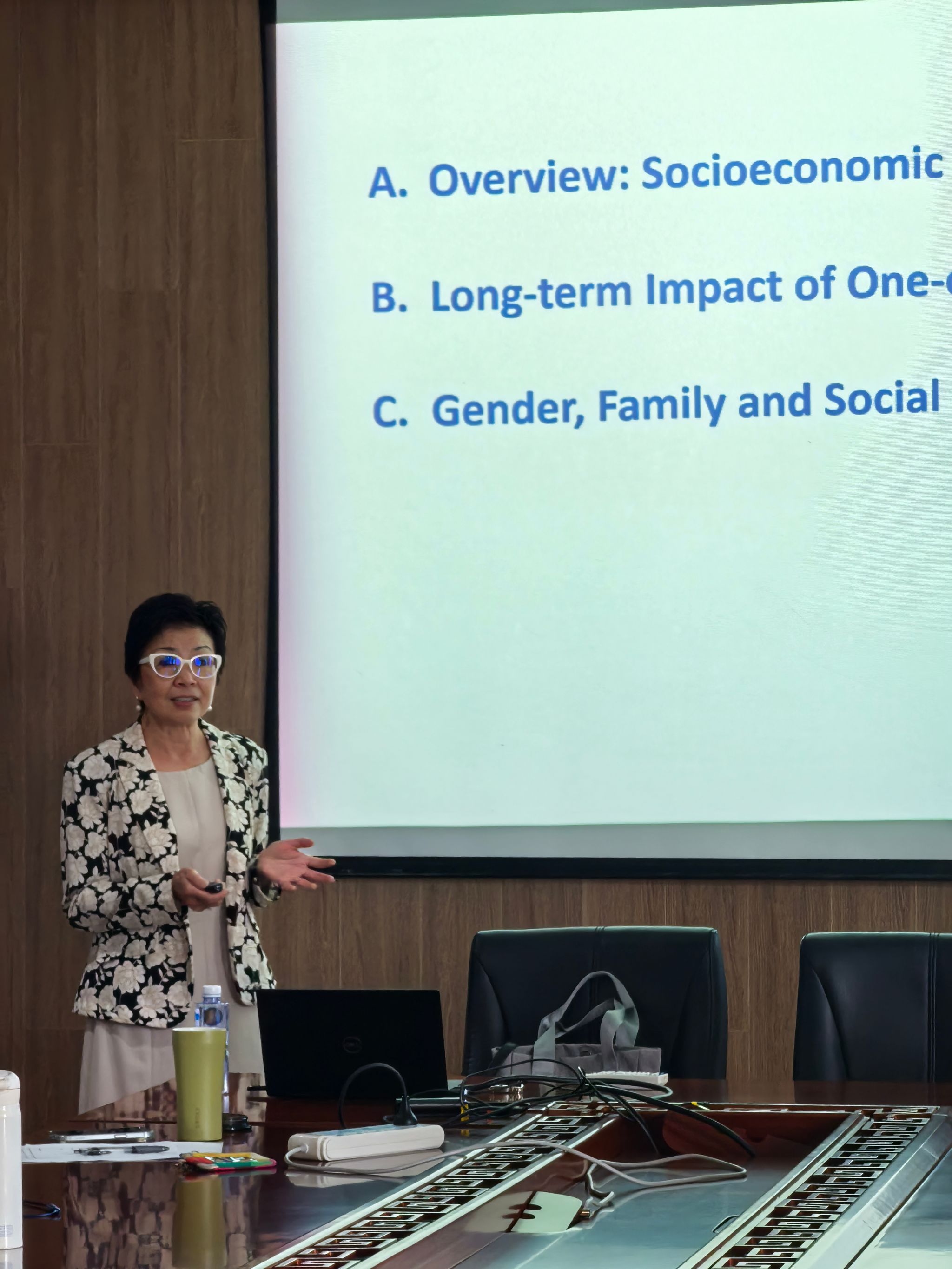
At the outset of his lecture, Professor Fan pointed out that current research on China’s fertility rate often falls into the trap of a single explanatory framework—either “policy determinism” or “economic determinism.” Such approaches have failed to systematically trace the phased evolutionary logic of fertility changes over more than seventy years; they have also inadequately explored the long-term intergenerational effects of the one-child policy and the profound role of shifts in sociocultural attitudes; and they lack an integrated explanation for the causes of the extremely low fertility rate. To address this research gap, his team developed the “Perfect Storm” analytical framework, which comprehensively explains the multiple driving mechanisms behind China’s sustained fertility decline from three dimensions: socioeconomic and demographic processes, the long-term effects of the one-child policy, and shifts in social structure and attitudes.
In his keynote presentation, Professor Fan presented three core research findings. First, fertility trends in China exhibit distinct phased characteristics, and the effects of policies are highly dependent on the underlying social context. The “Later, Longer, Fewer” policy of the 1970s drove a rapid decline in fertility rates, primarily because the policy aligned with the public’s voluntary demand for family planning; in contrast, the one-child policy implemented in 1979 did not result in an immediate sharp drop in fertility rates, and its short-term impact was far weaker than the natural effects of socioeconomic development. China completed the classic demographic transition in less than seventy years, but the strong policy intervention left a profound institutional legacy.
Second, the long-term effects of the one-child policy are a major historical root cause of the current extremely low fertility rate. The “inverted family” model spawned by the policy has fundamentally altered the intergenerational flow of resources—families’ concentrated investment in their only child has driven up society-wide childcare and education costs. Combined with the pressure of elder care imposed by the “4-2-1” family structure, this has created a widespread discrepancy where “the desired fertility rate generally exceeds the actual fertility rate.” At the same time, fertility preferences are transmitted across generations, further entrenching the small-family fertility model.
Third, shifts in social attitudes and structures constitute a sustained driving force behind the decline in fertility rates, exhibiting characteristics of “Mosaic modernity” unique to China. The surge in women’s educational attainment, the imbalance in the sex ratio at birth, and the tradition of hypergamy have collectively delayed the age of marriage and childbearing and suppressed marriage rates, while the rise of individualism has reshaped the meaning of childbearing and family. However, unlike the Second Demographic Transition in the West, China still retains a strong tradition of familism; the proportion of births outside marriage remains extremely low, and childbearing remains highly tied to marriage. Furthermore, existing pro-birth policies generally lack gender sensitivity, and issues such as the “maternity penalty” in the workplace and unequal access to assisted reproductive technologies continue to suppress women’s willingness to have children.
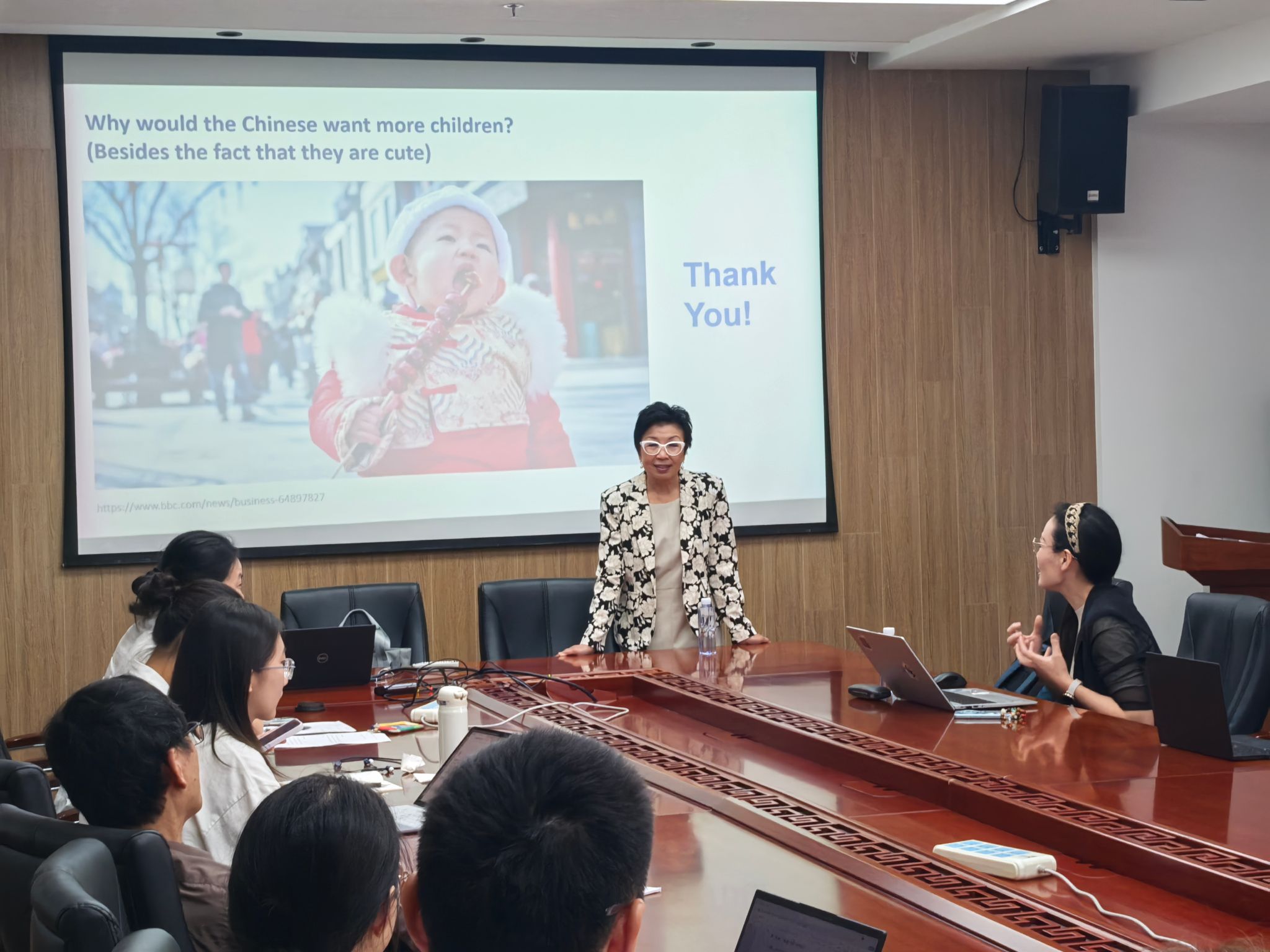
During the Q&A session, Professor Chen Rong from the School of Sociology was the first to ask a question regarding the current situation of ultra-low fertility in Shanghai. Professor Fan responded by pointing out that low fertility rates in megacities are a global trend. Shanghai ranks among the highest in the country in terms of housing prices, educational competition, and cost of living; the effect described in the paper—that “for every 1% increase in housing prices, the second-child birth rate decreases by 17.8%”—is even more pronounced in megacities. At the same time, fierce competition for high-quality resources has not translated into incentives for childbearing but has instead raised the threshold for educational investment. Shanghai women have higher aspirations for career development, and the “motherhood penalty” is particularly pronounced, further dampening their willingness to have children. Subsequently, Professor Chen Chen posed questions regarding the limits of localizing the theory of the second demographic transition and the direction of policy adjustments. Professor Fan emphasized that China’s strong family-oriented culture, the close link between childbearing and marriage, and strong policy intervention constitute the basis for theoretical revisions; Western models cannot be directly applied. At the policy level, the focus should be on reducing the costs of child-rearing and education, improving universal childcare services, and promoting gender equality—alleviating the pressure on young people to have children by addressing structural constraints rather than relying on moral appeals.
Finally, Professor Chen Chen summarized that this study, using the “perfect storm” framework, systematically integrates multiple mechanisms—including historical institutions, socioeconomic factors, and cultural norms—thereby overcoming the limitations of single-factor explanations. It reevaluates the long-term impacts of China’s fertility policies, offering significant theoretical innovation for deepening research on low fertility in East Asia, as well as providing a clear academic reference for optimizing China’s fertility support policies. The lecture concluded successfully amid a lively atmosphere of academic exchange.